
How Often Should You Replace Your Roof in New Zealand? Complete Guide 2025
Quick Answer:
Most New Zealand roofs need replacement every 15-50 years, depending on material and location:
- Concrete/clay tiles: 50+ years (most common in NZ)
- Colorsteel/metal: 40-50 years
- Asphalt shingles: 15-25 years
- Factors: Coastal exposure, seismic activity, and UV levels significantly impact lifespan in New Zealand
Introduction: Understanding Roof Replacement Timelines in New Zealand
So the question of time, how often should you replace your roof? Your roof is your home’s first defense against New Zealand’s diverse and often harsh weather conditions. From the subtropical storms of Auckland to the alpine snow loads of Queenstown, and the earthquake risks throughout both islands, Kiwi roofs face unique challenges that directly impact their lifespan.
The good news? Most New Zealand homes feature durable concrete or clay tiles that can last 50 years or more with proper maintenance. However, with our high UV index (40% higher than Europe), salt-laden coastal winds, and seismic activity, even the best roofs require eventual replacement.
Understanding when to replace your roof isn’t just about preventing leaks—it’s about protecting your entire home’s value, meeting insurance requirements, and ensuring compliance with the New Zealand Building Code. This comprehensive guide will help you determine exactly when your roof needs replacing and what factors unique to New Zealand affect this timeline.
Roof Lifespan by Material Type in New Zealand
Concrete and Clay Tiles (50 – 100 years)
Concrete and clay tiles dominate New Zealand roofing, found on approximately 70% of homes nationwide. These materials excel in our climate, offering exceptional durability against UV radiation and temperature fluctuations.
Concrete tiles typically last 50-70 years in New Zealand conditions. They perform exceptionally well in areas like Wellington and Canterbury, where wind resistance is crucial. The main consideration is the underlayment, which usually needs replacement every 20-30 years, even when tiles remain sound. In earthquake-prone regions, modern flexible underlayment’s and proper fixing systems are essential for longevity.
Clay tiles can last 70-100 years, making them one of the most durable options for New Zealand homes. They’re particularly popular in older suburbs of Auckland, Wellington, and Christchurch. Their natural composition resists salt air better than concrete, making them ideal for coastal properties from Bay of Islands to Dunedin.
Colorsteel and Metal Roofing (40 – 50 years)
New Zealand’s Colorsteel (manufactured by New Zealand Steel) has become increasingly popular, now covering about 25% of Kiwi homes. Specifically designed for our conditions, it features a five-layer protection system including ZAM® (zinc, aluminum, and magnesium) coating.
In inland areas like Hamilton or Palmerston North, Colorsteel roofs easily achieve their 40-50 year lifespan. However, coastal properties within 500 metres of the sea may see reduced lifespans of 25-35 years without regular washing to remove salt deposits. The BRANZ (Building Research Association of New Zealand) recommends washing metal roofs every 3-6 months in severe marine environments.
Standing seam metal roofing, while more expensive, can last 50-70 years and offers superior performance in high-wind zones like Wellington, which experiences over 170 days of strong winds annually.
Long-Run Iron Roofing (25 – 40 years)
Traditional corrugated iron, once the backbone of New Zealand roofing, typically lasts 25-40 years depending on maintenance and coating quality. Older galvanised iron roofs common in pre-1980s homes may show significant deterioration after 30 years, particularly in coastal areas.
Modern versions with improved coatings perform better, but regular painting (every 7-10 years) is essential for maximising lifespan. Rural properties often see better longevity due to reduced pollution and salt exposure.
Asphalt Shingles (15 – 25 years)
Less common in New Zealand (found on approximately 5% of homes), asphalt shingles face challenges from our high UV levels. The intense New Zealand sun, particularly in regions like Nelson (2,400+ sunshine hours annually), can cause premature deterioration.
These roofs typically last 15-20 years in northern regions and 20-25 years in southern areas with less UV exposure. They’re most common in Canterbury and Otago, where the drier climate reduces moss and lichen growth issues.
Butynol and Membrane Roofing (20 – 30 years)
Popular for flat roofs and modern architectural homes, Butynol (a New Zealand-made synthetic rubber membrane) typically lasts 20-30 years. It’s particularly common in Auckland’s modern developments and architectural homes throughout the country.
Performance varies significantly based on installation quality and sun exposure. North-facing flat roofs may require replacement after 20 years, while protected areas can last the full 30 years. Regular inspections are crucial, as ponding water—common in Auckland’s high rainfall (1,240mm annually)—can accelerate deterioration.
Warning Signs Your New Zealand Roof Needs Replacement
Visual Indicators Specific to NZ Conditions
Lichen and Moss Growth is particularly problematic in New Zealand’s humid regions. While common on south-facing roofs from Northland to Southland, extensive growth indicates moisture retention that accelerates deterioration. If more than 30% of your roof shows heavy biological growth, replacement planning should begin.
Tile Deterioration manifests differently across New Zealand. In Auckland and coastal areas, look for white salt crystallisation on tiles. In Central Otago and Canterbury, freeze-thaw cycles cause distinctive cracking patterns. Concrete tiles showing aggregate exposure or surface flaking indicate advanced wear requiring attention.
Metal Roof Warning Signs include the distinctive red rust spots that appear when Colorsteel’s protective coating fails. In coastal areas, white rust (zinc oxidation) precedes red rust and signals immediate maintenance needs. Any perforation, particularly near fixings or flashings, necessitates urgent assessment.
Performance Issues in New Zealand Homes
Ceiling Staining Patterns in New Zealand homes often indicate specific problems. Brown water marks typically appear first in corners where roof planes meet—a common issue in villa-style homes. During winter, condensation staining (different from leak staining) affects 35% of New Zealand homes due to inadequate ventilation.
Increased Power Bills can signal roof deterioration. With electricity costs among the highest in the OECD, a failing roof’s impact on insulation becomes financially significant. Homes in Christchurch report 20-30% higher heating costs when roof spaces allow moisture infiltration.
Earthquake Damage requires special attention. Post-earthquake inspections should check for shifted tiles, cracked ridging, and compromised fixings. Even minor seismic activity (4.0+ magnitude) warrants inspection in older homes, particularly those with heavy tile roofs.
Age-Related Considerations for Kiwi Homes
Insurance Implications are significant in New Zealand. Most insurers require specific inspections for roofs over 25 years old. Some companies, including Tower and IAG, may decline coverage for roofs over 50 years without professional certification. Following the Canterbury earthquakes, insurers scrutinise roof condition more carefully.
Building Code Compliance becomes relevant during replacement. Homes built before 1992 (pre-Building Act) often require significant upgrades to meet current standards, including improved fixings for wind zones and underlayment’s meeting current E2/AS1 requirements.
Factors Affecting Roof Longevity in New Zealand
New Zealand’s Unique Environmental Challenges
Coastal Exposure Zones significantly impact roof lifespan across New Zealand’s 15,000km coastline. Properties within Zone D (0-500m from sea) experience severe conditions requiring special materials and maintenance. Even Wellington’s CBD, despite being inland, falls into high exposure zones due to wind-driven salt.
The West Coast receives over 2,500mm annual rainfall, creating persistent moisture challenges. Roofs in Hokitika or Greymouth require superior drainage and more frequent maintenance than those in Canterbury, which receives just 600mm annually.
UV Radiation Impact cannot be overstated. New Zealand’s UV levels are approximately 40% higher than equivalent northern hemisphere latitudes. During summer, the UV index regularly exceeds 12 in many areas. This intense radiation breaks down roofing materials faster, particularly affecting bitumen-based products and rubber membranes.
Seismic Considerations affect roof longevity nationwide. Regular minor earthquakes cause gradual loosening of fixings and microscopic cracking in rigid materials. The Wellington region experiences over 20,000 earthquakes annually (mostly minor), creating cumulative stress on roofing systems.
Installation and Maintenance Factors
Licensed Building Practitioner (LBP) Requirements ensure quality installation. Since 2012, restricted building work (including roof replacement) requires an LBP. Properly licensed installation can add 10-15 years to roof life compared to DIY or unlicensed work.
Ventilation Standards in New Zealand require specific solutions. Our high humidity levels (averaging 70-80% nationally) demand adequate roof space ventilation. Modern installations include soffit vents and ridge ventilation systems, preventing the moisture damage that plagued many 1990s Mediterranean-style homes.
Regular Maintenance Impact is quantifiable. BRANZ studies show that annual maintenance can extend roof life by 30-40%. This includes gutter cleaning (particularly important during autumn in areas with deciduous trees), washing metal roofs in coastal areas, and treating biological growth.
Cost Considerations for New Zealand Roof Replacement
Current Market Pricing (2025)
Concrete/Clay Tile Replacement costs $200-$350 per square metre installed, including removal of existing roofing. A typical 200m² home costs $40,000-$70,000. Premium clay tiles or heritage matching can increase costs by 40-50%.
Colorsteel Replacement ranges from $150-$250 per square metre, making it cost-effective for many homeowners. Long-run iron costs slightly less at $130-$200 per square metre. Standing seam systems command premium prices of $250-$400 per square metre.
Regional Price Variations are significant. Auckland prices run 15 – 20% higher than the national average due to demand and compliance costs. Queenstown-Lakes District sees premiums of 25-30% due to logistics and alpine-rated requirements. Rural areas may face additional transport charges of $2,000-$5,000.
Insurance and EQC Considerations
Natural Disaster Coverage through EQC (Earthquake Commission) covers sudden damage but not gradual deterioration. Understanding this distinction is crucial when planning replacement timing. Many homeowners mistakenly assume earthquake damage to old roofs qualifies for full replacement.
Insurance Premium Impacts vary by roof age and type. Properties with roofs over 25 years old face premium increases of 20-35%. Some insurers offer discounts of 10-15% for new roofs with producer statements and warranties.
Return on Investment
Property Value Impact in New Zealand is substantial. Real Estate Institute data shows roof replacement returns 70-85% of cost in increased property value. In competitive markets like Auckland and Wellington, a new roof can mean the difference between sale and passed-in at auction.
Energy Efficiency Gains are measurable. EECA (Energy Efficiency and Conservation Authority) data shows proper roof replacement with modern insulation standards can reduce heating costs by 25-35%. With average household energy bills exceeding $2,500 annually, savings accumulate quickly.
Inspection and Maintenance Schedule for NZ Conditions
Professional Inspection Requirements
Annual Professional Inspections should occur before winter (April-May) to identify issues before the harsh weather season. Professional inspectors in New Zealand should hold relevant qualifications such as BOINZ (Building Officials Institute of New Zealand) certification or be registered building surveyors.
Post-Event Inspections are crucial after significant weather events. Any earthquake over 5.0 magnitude, wind speeds exceeding 120km/h, or hailstorms warrant immediate inspection. Following Cyclone Gabrielle (2023), many homeowners discovered damage that would have been minor if addressed immediately but became major issues within months.
Pre-Purchase Inspections in New Zealand should specifically address roof condition given our weather extremes. The standard pre-purchase inspection should include roof space access to check both covering and structure. Many buyers now request specific roof condition reports for homes with roofs over 20 years old.
DIY Inspection Guidelines
Safe Visual Inspection can be conducted from ground level using binoculars, focusing on visible areas. Look for displaced tiles after storms, rust streaks on metal roofs, and sagging gutters indicating water pooling. Never attempt roof access during winter months or within 48 hours of rain.
Interior Inspection Points include checking ceiling spaces for daylight penetration, water staining on sarking or insulation, and rust on roofing nails. During heavy rain, check for active leaks—even small drips indicate problems requiring attention.
Documentation Methods should include dated photos from multiple angles, noting specific areas of concern. Many insurance claims in New Zealand fail due to inadequate documentation of gradual deterioration versus sudden damage.
Seasonal Maintenance Calendar
Autumn (March – May): Clear gutters and downpipes before winter rains. In deciduous areas like Christchurch and Central Otago, this may require multiple cleanings. Trim overhanging branches that could damage roofing in winter storms.
Winter (June – August): Monitor for storm damage after each significant weather event. Check for ice damming in Central Otago and Canterbury high country. Ensure ventilation remains unobstructed despite the temptation to seal homes for warmth.
Spring (September – November): Conduct thorough cleaning of roof surfaces, particularly removing lichen and moss growth that flourished during winter. Apply moss and mould treatments in northern regions. Check and clear any storm debris.
Summer (December – February): Ideal time for repairs and maintenance. Wash metal roofs in coastal areas to remove salt buildup. Apply protective coatings if needed. This is the optimal season for full replacement if required.
Special Considerations for New Zealand Properties
Heritage and Character Homes
Pre-1940s Villas and Bungalows require special consideration under many council District Plans. Original slate or terracotta tiles may need specialist restoration rather than replacement. Resource consent may be required in character overlay areas, adding 6-8 weeks and $2,000-$5,000 to projects.
Replacement Materials must often match original profiles and colours. This particularly affects areas like Auckland’s Ponsonby, Wellington’s Mount Victoria, and Dunedin’s heritage precincts. Modern equivalents meeting heritage requirements often cost 30-40% more than standard options.
Earthquake Strengthening Requirements
Seismic Restraints are now mandatory for roof replacements in many areas. This includes upgraded tile fixing systems, flexible underlays, and proper bracing connections. Canterbury rebuilds set new standards now applied nationwide.
Weight Considerations become crucial in earthquake zones. Converting from heavy tiles to lightweight metal can improve seismic performance but may require engineering assessment for structural modifications. Many Wellington homes have transitioned to metal roofing for this reason.
Coastal Property Requirements
Marine Environment Classifications determine material requirements. Sea spray zones extend up to 1km inland in exposed areas like Wellington’s south coast. Stainless steel fixings, specialised coatings, and increased maintenance schedules are mandatory.
Maintenance Schedules for coastal properties are legally different. Producer warranties often require documented six-monthly washing for metal roofs within 500m of the coast. Failure to maintain this schedule voids warranties—a costly oversight many homeowners discover too late.
Planning Your Roof Replacement in New Zealand
Optimal Timing Considerations
Best Months for Replacement are December through March when weather is most stable. However, this is peak season with 4-8 week booking delays and 10-15% price premiums. October-November and April offer good weather with better availability.
Avoiding Winter Replacement is advisable unless emergency repairs are needed. June through August brings persistent rain, shorter daylight hours, and safety concerns. Some contractors charge 20-30% premiums for winter work due to weather delays.
Council Consent Requirements vary by location and scope. Full replacement typically requires building consent, taking 15 – 20 working days for processing. Auckland Council fast-tracks simple roof replacements in 10 days if documentation is complete.
Choosing a Licensed Roofing Professional
LBP Requirements are non-negotiable for restricted building work. Verify practitioners through the LBP register. Ensure they hold appropriate classes – External Moisture Management or Roofing, depending on the work scope.
Essential Questions for Contractors:
- Are you currently licensed and insured for roofing work in New Zealand?
- Can you provide producer statements and warranties?
- What specific experience do you have with [your roof type] in [your region]?
- How do you handle weather delays and cost overruns?
- Will you obtain necessary consents and arrange inspections?
Red Flags to Avoid:
- Cash-only operators offering significant discounts
- Unwillingness to provide written quotes or contracts
- No fixed business address or only mobile contact
- Pressure to sign immediately or pay large deposits
- Unable to provide recent local references
Quote Comparisons should include identical scopes. Ensure quotes specify:
- Removal and disposal of existing materials
- Consent and inspection costs
- Scaffolding and safety equipment
- Specific product brands and warranties
- Timeline and weather delay provisions
FAQ Section – Quick Answers for Kiwi Homeowners
How do I know if my roof needs replacing in New Zealand?
Your roof needs replacing when you observe multiple warning signs including: visible deterioration covering more than 20% of the roof surface, recurring leaks despite repairs, age exceeding typical lifespan for your material (50+ years for tiles, 40+ for metal), or failure to meet current building standards. Professional inspection is recommended if your roof is over 25 years old.
Can a concrete tile roof last 50 years in New Zealand?
Yes, quality concrete tile roofs regularly last 50 years in New Zealand with proper maintenance. Many 1970s homes still have original concrete tiles performing well. However, underlayment’s typically require replacement at 25-30 years, even when tiles remain sound. Coastal properties may see reduced lifespans of 35-40 years due to salt exposure.
Should I replace my roof before selling my house in NZ?
Replace your roof before selling if it’s over 40 years old or showing significant wear. Real estate data shows new roofs return 70-85% of cost in sale price and reduce time on market by 20-30%. Buyers increasingly request LIM reports and building inspections that highlight roof condition. A new roof eliminates a major negotiation point.
What happens if I don’t replace my deteriorating roof?
Delaying replacement leads to escalating damage including structural timber rot (repair costs $10,000-$50,000), damaged insulation reducing energy efficiency by 40%, interior damage from leaks requiring Gib replacement and repainting, potential insurance claim denial for gradual damage, and health issues from mold growth. Early replacement costs less than accumulated damage repairs.
Does insurance cover roof replacement in New Zealand?
Insurance covers sudden and accidental damage (storms, falling trees) but not gradual deterioration or maintenance issues. Most policies exclude roofs over 50 years old or require specific inspections for roofs over 25 years. Document all maintenance and storm events. EQC covers earthquake damage but not wear and tear.
How often should I inspect my roof in New Zealand?
Conduct visual inspections every three months, professional inspections annually before winter, and immediate checks after earthquakes over 5.0, winds exceeding 120km/h, or hailstorms. Coastal properties need six-monthly professional inspections. Document all inspections for insurance purposes.
Can you put Colorsteel over old iron roofing?
While technically possible, building consent is required and it’s rarely recommended. Issues include added weight stressing structure, trapped moisture causing accelerated corrosion, voided warranties on new materials, and difficulty achieving proper fixing into sound substrate. Complete replacement costs only 20-30% more but lasts significantly longer.
What’s the best roofing material for New Zealand conditions?
The best material depends on your location and budget. Concrete tiles excel for longevity and cost-effectiveness nationwide. Colorsteel offers superior performance in high-wind zones like Wellington. Clay tiles suit heritage areas and coastal zones. Consider your specific microclimate, council requirements, and maintenance commitment when choosing.
Quick Reference Guide for New Zealand Homeowners
Roof Replacement Timeline by Material
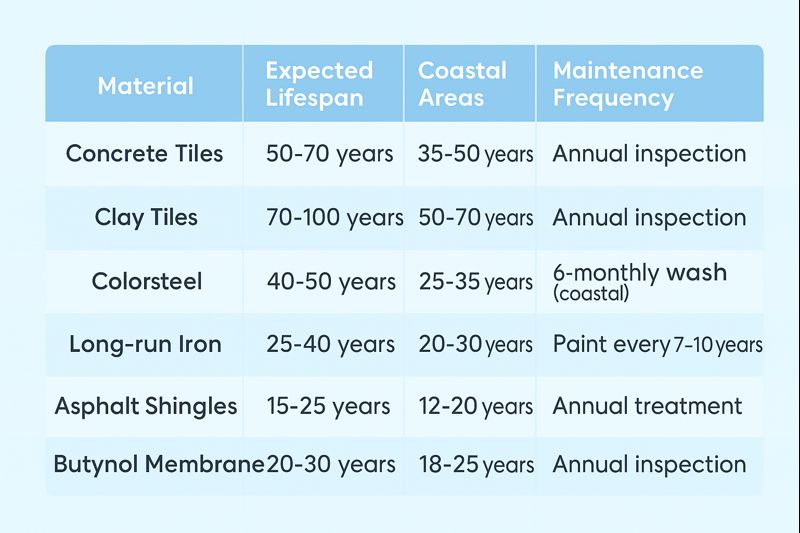
How often should you replace your roof?
Action Checklist for Roof Assessment
- Determine Current Roof Age
- Check property file at council
- Review building records
- Contact previous owners
- Identify Your Roofing Material
- Take clear photos for expert identification
- Check property documentation
- Measure thickness and profile
- Assess Current Condition
- Complete visual inspection checklist
- Document any damage with photos
- Note recent weather events
- Get Professional Assessment
- Book RANZ-registered inspector
- Request written condition report
- Obtain replacement cost estimate
- Plan Your Timeline
- Budget for replacement costs
- Schedule optimal replacement season
- Arrange temporary accommodation if needed
Regional Considerations Map
Northland/Auckland: High humidity, occasional cyclones, moderate UV
- Premium for moss/lichen treatment
- Coastal corrosion concerns
- Council heritage overlays
Waikato/Bay of Plenty: Varied conditions, high rainfall areas
- Good material longevity inland
- Geothermal effects in some areas
Wellington/Wairarapa: Extreme wind, earthquakes, salt spray
- Highest fixing requirements
- Frequent storm damage
- Premium for wind-rated materials
Canterbury: Temperature extremes, earthquakes, lower rainfall
- Freeze-thaw considerations
- Seismic strengthening requirements
- Good conditions for most materials
West Coast: Extreme rainfall, high humidity
- Highest maintenance requirements
- Premium drainage needed
- Biological growth issues
Otago/Southland: Snow loads, freeze-thaw, lower UV
- Structural considerations for snow
- Better longevity for most materials
- Ice damming prevention crucial
Conclusion: Protecting Your Investment
Your roof is more than just covering – it’s your home’s primary defense against New Zealand’s challenging climate. Understanding replacement timelines helps you budget effectively, maintain insurance coverage, and protect your property’s value.
Remember that these timelines are guidelines. Your specific situation – location, roof design, maintenance history, and local conditions – ultimately determines replacement timing. When in doubt, invest in professional assessment. The cost of inspection is minimal compared to premature failure or delayed replacement.
For most New Zealand homeowners, planning for roof replacement every 40-50 years with major maintenance at 20-25 years provides a realistic framework. Start planning when your roof reaches 60% of its expected lifespan, and you’ll avoid emergency replacements and have time to choose quality materials and contractors.
Whether you’re in a Waikato wind zone, coastal Auckland, or alpine Queenstown, proper roof management protects your most significant investment – your home.